
 FREE SHIPPING on US orders over $150. Need help? Contact Us
 Cultured Pearls
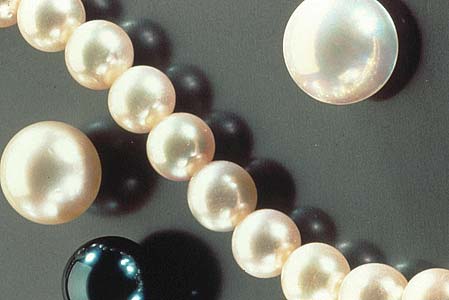
Pearls: Very Cultured
 Pearls are an organic gem, created when an oyster covers a foreign object with beautiful layers of nacre. Long ago, pearls were important financial assets, comparable in price to real estate, as thousands of oysters had to be searched for only one pearl. They were rare because they were created only by chance.
Today pearls are cultured by man: shell beads are placed inside an oyster and the oyster is returned to the water. When the pearls are later harvested, the oyster has covered the bead with layers of nacre. Most cultured pearls are produced in Japan. In the warmer waters of the South Pacific, larger oysters produce South Sea cultured pearls and Tahitian black cultured pearls, which are larger in size. Freshwater pearls are cultured in freshwater mussels, mostly in China.
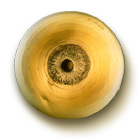
The quality of pearls is judged by the orient, which is the soft iridescence caused by the refraction of light by the layers of nacre, and luster, the reflectivity and shine of the surface. Fine pearls do not have any flaws or spots in the nacre: it has an even smooth texture. Other factors which affect value are the regularity of the shape, size, and color: rose tints are the most favored.
Cultured pearls and natural pearls can be distinguished from imitation pearls by a very simple test. Take the pearl and rub it (gently!) against the edge of a tooth. Cultured and natural pearls will feel slightly rough, like fine sandpaper, because of the texture of natural nacre. Imitations will feel as smooth as glass because the surface is molded or painted on a smooth bead.


